
Who is at Fault in a Rear End Truck Accident?
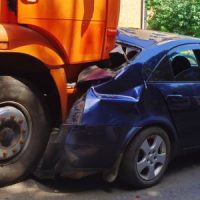
When many people think of rear-end accidents, they often imagine two passenger vehicles involved in a wreck. However, these collisions can also involve large transport trucks and in these cases, rear-end accidents are not the minor events they usually are when smaller vehicles are involved. Due to the size and weight of transport trucks, a rear-end accident can be fatal.
Many people believe that when a rear-end accident occurs, the driver that struck another vehicle from behind is always at fault. However, this is not necessarily always true. Below, our San Antonio truck accident attorney explains in greater detail.
When is a Truck Driver Liable for a Rear-End Accident?
After a rear-end accident, the driver in the rear vehicle is typically presumed to be at least partly, if not wholly, at fault for the crash. This is due to the fact that all motorists are expected to drive in a reasonable manner to keep everyone safe. This includes keeping a safe distance between them and any vehicle in front of them. When truck drivers fail to keep this safe distance, they can be held liable for an accident.
When a truck driver rear-ends a smaller vehicle, they will typically be found at least partly at fault. However, there are some scenarios that can leave the leading driver at least partly liable, as well.
When are Leading Drivers Liable for a Rear-End Accident?
Although the rear driver is typically presumed to be at least partly at fault for a rear-end accident, there are times when leading drivers are also to blame. For example, if a driver of a passenger vehicle backs out of a parking space and into a truck behind them, they may be found fully at fault for the crash.
Additionally, a driver may pull out too quickly in front of a truck, resulting in a read-end accident. Trucks require much longer stopping distances due to their size, weight, and momentum. When a driver does not provide truck drivers with the space they need, essentially cutting the truck off, leading drivers can be found liable for an accident.
What Happens When Drivers Share Blame?
Texas uses a modified comparative fault system known as the 51 percent rule. Under this law, accident victims can recover compensation if they are 50 percent or less at fault for an accident. If an injured victim is 50 percent or less to blame but they did contribute to the accident, any damages they are awarded are reduced by their same percentage of fault.
For example, the driver of a smaller vehicle may pull out in front of a truck and fail to give the trucker the appropriate space. The truck driver, though, may have been speeding and distracted behind the wheel and so they did not see the smaller vehicle’s signal or have time to stop.
In this instance, the truck driver may be assigned 80 percent of fault while the other motorist is assigned 20 percent. If the driver of the smaller vehicle was awarded $100,000, they would receive $80,000.
Our Truck Accident Attorney in San Antonio Can Prove Your Case
Liable parties will always raise the comparative fault law as a defense to shield them from paying full liability. At the Law Office of Israel Garcia, our San Antonio truck accident attorney can refute these arguments and prove your case so you obtain the full compensation available. Call us now at 210-LAW-9999 or contact us online to schedule a consultation and to learn more about how we can help.
Source:
statutes.capitol.texas.gov/docs/cp/htm/cp.33.htm
